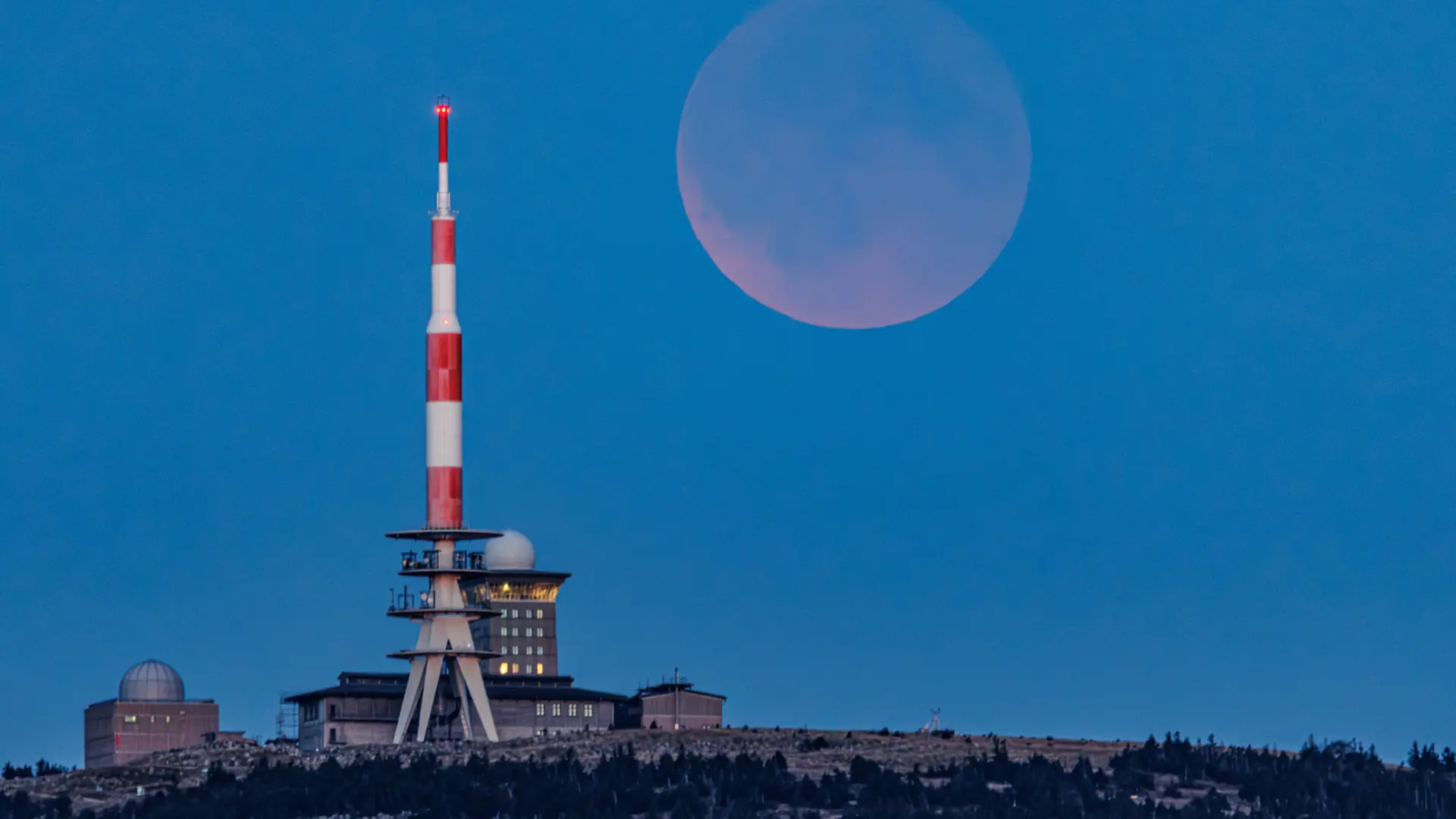
Are you searching for "Blutmond Heute" (Blood Moon Today) and wondering if Germany is currently graced by this stunning celestial event? While a spectacular Blood Moon might not be illuminating the skies tonight, prepare your calendars and telescopes for an unmissable spectacle on **September 7, 2025**. Germany is set to witness a total lunar eclipse, transforming our familiar Moon into a mesmerizing crimson orb. This comprehensive guide will walk you through the crucial timings, optimal viewing spots, and essential tips to ensure you don't miss a single moment of this rare astronomical display.
The Spectacle Awaits: Germany's Total Lunar Eclipse in September 2025
The night of September 7, 2025, promises to be truly special for skygazers across Germany. A total lunar eclipse, commonly known as a "Blutmond" or Blood Moon, will unfold, painting the Moon in hues of red, orange, and even deep brown. This captivating phenomenon occurs when the Earth passes directly between the Sun and the Moon, casting a shadow that completely engulfs our lunar neighbor. Unlike a solar eclipse, which requires specialized eye protection, a lunar eclipse is perfectly safe and awe-inspiring to observe with the naked eye.
What makes this particular event even more intriguing for observers in Germany is the timing. The Moon will already be partially, if not totally, eclipsed as it rises above the eastern horizon. This presents a unique opportunity to witness the 'Blutmond' emerging from the twilight glow, a truly dramatic entrance to the night sky.
Key Timings for the September 7, 2025, Blutmond in Germany
To make sure you catch every phase of this stunning event, here are the essential timings for the total lunar eclipse on September 7, 2025. Please note that these times are approximate and may vary by a few minutes depending on your exact location within Germany.
- Beginning of Total Lunar Eclipse: Approximately 19:30 CET (Central European Time)
- Maximum Totality: Approximately 20:11 CET
- End of Total Lunar Eclipse: Approximately 20:53 CET
It's important to understand that the Moon will begin its total immersion into Earth's shadow around 19:30 CET. For many parts of Germany, the Moon will be rising around this time or slightly later. For instance, in western cities like Dortmund, moonrise is expected around 20:00 CET, meaning the Moon will already appear partially or fully eclipsed as it ascends. In eastern regions, the Moon will rise a little earlier, offering a slightly longer viewing window for the initial stages of the eclipse. The peak of the Blood Moon, when it will display its most vivid crimson tones, is anticipated around 20:11 CET, making this a prime time to look towards the eastern sky. The total phase will conclude around 20:53 CET, after which the Moon will gradually lighten as it moves out of Earth's umbra.
Unveiling the "Blutmond": What Makes It Red?
The term "Blutmond" perfectly describes the Moon's eerie, reddish glow during a total lunar eclipse. But why does our usually silvery satellite take on such a dramatic hue? The phenomenon is a captivating display of physics and atmospheric optics.
During a total lunar eclipse, the Moon passes completely into the Earth's umbra, the darkest part of its shadow. If the Earth had no atmosphere, the Moon would simply disappear from view. However, Earth's atmosphere acts like a lens, bending and filtering sunlight. As sunlight passes through our planet's atmosphere, blue light waves are scattered more efficiently by air molecules (which is why our sky appears blue). Red and orange light waves, with their longer wavelengths, are less scattered and can penetrate through the atmosphere. This scattered red light is then refracted or bent towards the Moon.
Imagine all the sunsets and sunrises happening around the world at that moment – their collective reddish glow is projected onto the Moon. The intensity and exact shade of red can vary significantly, ranging from bright coppery orange to deep, almost brownish-red, depending on factors such as dust, clouds, and volcanic ash present in Earth's atmosphere at the time of the eclipse. A cleaner atmosphere typically leads to a brighter, more vivid red, while a dustier one might result in a darker, duller shade. This dynamic interplay makes every Blood Moon a unique visual experience. To delve deeper into the science behind this incredible event, you might find our dedicated article on What is a Blood Moon? Total Lunar Eclipse Phenomenon Explained highly informative.
Your Ultimate Guide to Observing the 2025 Blutmond
Observing a Blood Moon is a truly rewarding experience that requires minimal preparation but benefits greatly from a few smart choices. Here’s how to make the most of the September 2025 event:
Finding Your Perfect Spot: Location & Horizon
The most crucial aspect of observing the 2025 Blutmond is finding a location with an unobstructed view of the eastern horizon. Since the Moon will be rising already eclipsed, anything blocking your view – tall buildings, dense trees, or hills – could obscure the initial and most dramatic phases. Consider these tips:
- Scout in Advance: If possible, visit potential viewing spots during the day or evening in the weeks leading up to September 7th to assess the eastern horizon.
- Seek High Ground: Hilltops, open fields, or even higher floors of buildings can provide excellent, clear views.
- Escape Light Pollution: While a Blood Moon is bright enough to cut through some urban glow, a truly dark sky will enhance the colors and overall experience. Head to the outskirts of towns or rural areas if possible. Websites and apps dedicated to light pollution maps can help you find suitable dark-sky locations.
Equipment for Enhanced Views (Optional)
The beauty of a lunar eclipse is its accessibility – no special equipment is needed, and it's perfectly safe to observe with the naked eye. However, for those looking to enhance their experience:
- Binoculars: A good pair of binoculars (e.g., 7x50 or 10x50) will offer a magnified view, revealing fascinating details on the lunar surface and intensifying the crimson hues. They are easy to use and portable.
- Small Telescopes: If you own a small telescope, it will provide an even closer look at the Moon's craters and features, showcasing the reddish tones in spectacular detail. Ensure your telescope is properly aligned and focused.
Capturing the Crimson Orb: Photography Tips
Many will want to immortalize this stunning event. Photographing a Blood Moon can be challenging but incredibly rewarding:
- Camera & Tripod: A camera capable of manual settings (DSLR or mirrorless) is ideal. A sturdy tripod is essential for sharp images, especially during longer exposures.
- Lens Choice: A telephoto lens (200mm or more) will get you closer to the Moon, while a wide-angle lens can capture the eclipsed Moon within a broader landscape, creating a dramatic scene.
- Settings: Experiment with settings. Start with ISO 400-800, aperture f/8 to f/11, and a shutter speed of a few seconds. The Moon moves surprisingly fast across the sky, so avoid excessively long exposures if you're not using a tracking mount. During totality, you'll need longer exposures as the Moon's brightness drops significantly.
- Remote Shutter: Use a remote shutter release or your camera's timer to avoid camera shake.
The All-Important Weather Check
Clear skies are paramount for observing any astronomical event. Even the most perfectly planned viewing spot will be useless if clouds obscure the Moon. Keep a close eye on weather forecasts in the days leading up to September 7, 2025. Look for predictions of clear, dry nights, especially for your chosen viewing location. If the initial forecast looks unfavorable, have a backup plan or be prepared to relocate if necessary.
Don't Miss Germany's Next Celestial Treat!
The total lunar eclipse on September 7, 2025, is a truly special event that promises to be both visually stunning and scientifically fascinating. It's a chance to connect with the cosmos and witness a rare natural wonder right from German soil. By preparing in advance and following these tips, you're set to have an unforgettable experience as the "Blutmond" graces our night sky.
While this article focuses on the magnificent September 2025 event, we understand that celestial enthusiasts are always eager for future dates. For information on other upcoming lunar and solar eclipses visible from Germany, including future Blood Moons, be sure to consult our comprehensive guide: Germany's Next Blood Moon: When & Where to See the Spectacle.
Mark your calendars, gather your friends and family, and prepare for an evening of awe and wonder. The Blood Moon of September 2025 is an experience not to be missed!