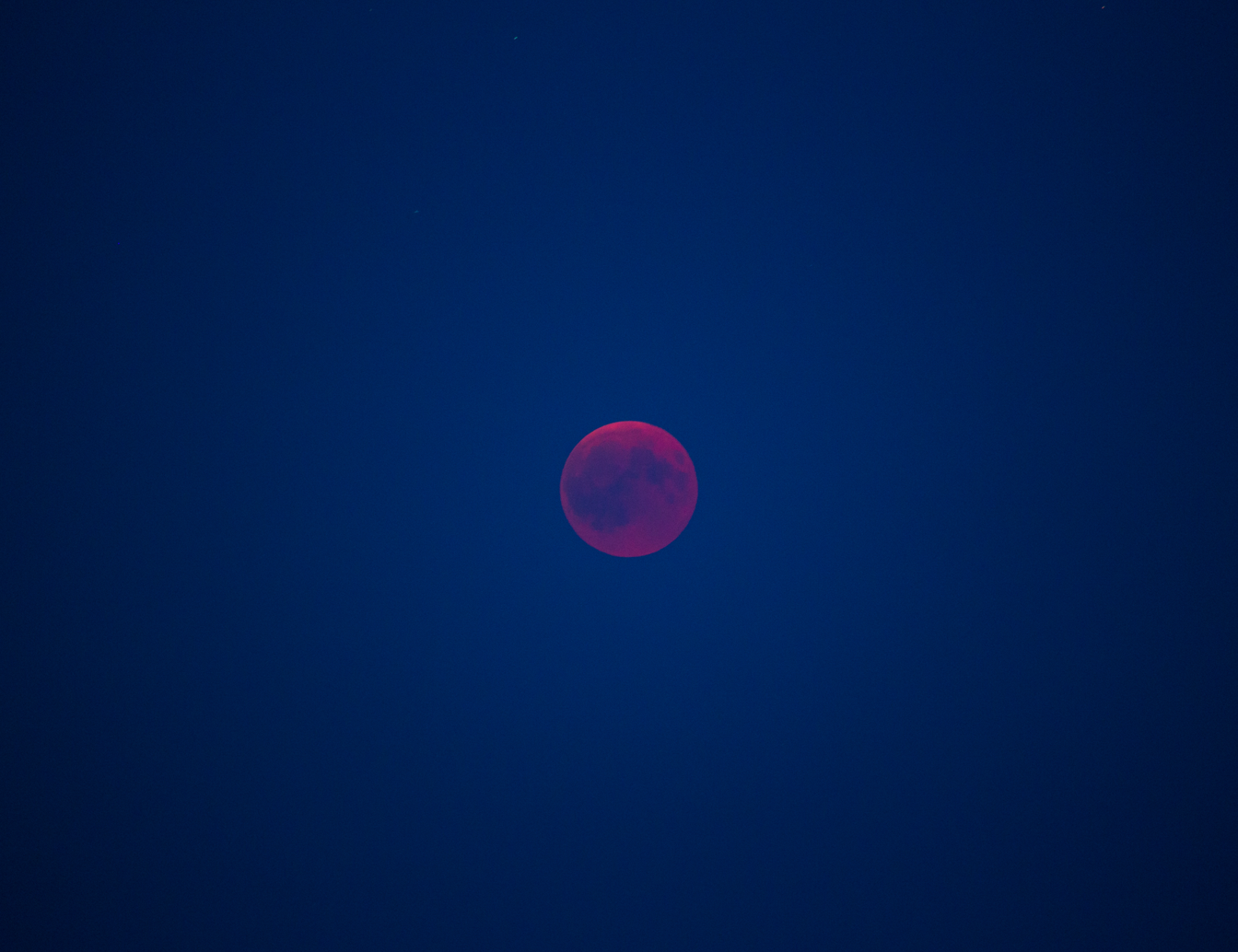
Prepare for a celestial treat! Stargazers across Germany are eagerly anticipating a rare and stunning astronomical event: a total lunar eclipse, popularly known as a Blutmond or Blood Moon. While many search for "Blutmond Heute" hoping for an immediate sighting, the next grand spectacle to grace German skies is scheduled for September 2025. This comprehensive guide will tell you everything you need to know about witnessing this breathtaking phenomenon, from key timings and prime viewing spots to the science behind its mesmerizing crimson glow.
A total lunar eclipse is not just a scientific marvel; it's a profound experience that connects us to the cosmos. Unlike solar eclipses, which require special eye protection, a lunar eclipse can be safely observed with the naked eye, making it accessible to everyone. The upcoming Blutmond promises to be particularly special, as the moon will emerge already in its fiery, eclipsed state as it rises over the eastern horizon.
When is Germany's Next Blood Moon? Mark Your Calendars for September 2025
The highly anticipated total lunar eclipse, a true Blutmond Heute for those planning ahead, is set to captivate Germany on Saturday, September 7, 2025. This extraordinary celestial alignment promises to be a memorable evening for anyone with a clear view of the night sky, weather permitting. Knowing the precise timings is crucial to catch every moment of this infrequent event.
The total lunar eclipse phases for Germany on September 7, 2025, are as follows:
- Beginning of Total Eclipse: Approximately 19:30 CET (Central European Time)
- Maximum of Total Eclipse: Approximately 20:11 CET
- End of Total Eclipse: Approximately 20:53 CET
What makes this particular Blood Moon especially exciting for German observers is the timing of moonrise. As the Moon ascends into the eastern sky, it will already be deep within Earth's shadow, presenting itself as a striking crimson orb right from its appearance. For instance, in Dortmund, the Moon is expected to rise around 20:00 CET on September 7, 2025. Areas further east in Germany will see the Moon rise a little earlier, offering an extended period to witness the partially or totally eclipsed Moon emerge above the horizon. This means you won't have to wait for the eclipse to progress; the spectacle begins the moment the Moon becomes visible.
For more detailed timings and a complete observation guide specifically for the 2025 event, be sure to check our dedicated resource: Blutmond 2025 in Germany: Key Times & Observation Guide.
Understanding the "Blutmond": Why the Moon Turns Red
The term "Blutmond" or Blood Moon captures the dramatic reddish-orange hue that the Moon takes on during a total lunar eclipse. But what exactly causes this stunning transformation? It's a fascinating interplay of celestial mechanics and atmospheric physics. A Blood Moon occurs when the Earth is positioned directly between the Sun and the Moon, casting a complete shadow over our natural satellite. This alignment, known as syzygy, means the Moon enters the darkest part of Earth's shadow, called the umbra.
You might expect the Moon to disappear entirely when it's in Earth's shadow, but that's not what happens. Instead, Earth's atmosphere acts like a prism and a filter. When sunlight travels through Earth's atmosphere, shorter-wavelength blue light is scattered much more efficiently by air molecules than longer-wavelength red light. This phenomenon is called Rayleigh scattering – the same reason our sky appears blue during the day and sunsets often glow red or orange.
During a total lunar eclipse, the blue light from the Sun is scattered away, but the red and orange wavelengths penetrate Earth's atmosphere, refract (bend), and are cast onto the Moon's surface. Essentially, you're seeing all the sunsets and sunrises on Earth projected onto the Moon simultaneously! The intensity and specific shade of red can vary significantly, ranging from bright orange to deep, dark red, depending on factors like the amount of dust and clouds in Earth's atmosphere at the time of the eclipse. Volcanic eruptions, for example, can inject particles into the atmosphere that lead to a darker, more muted Blood Moon.
To delve deeper into the scientific and cultural explanations of this magnificent celestial event, explore our article: What is a Blood Moon? Total Lunar Eclipse Phenomenon Explained.
Optimal Viewing Conditions and Tips for Germany
To fully appreciate the Blutmond Heute in September 2025, careful planning of your viewing strategy can make all the difference. While the event is visible to the naked eye, a few considerations will enhance your experience significantly.
Finding Your Perfect Spot
The most crucial factor for observation will be a clear view of the eastern horizon. Since the Moon will be rising already in its eclipsed state, any obstructions like buildings, trees, or hills to the east could obscure your view. Consider scouting locations in advance:
- Open Fields or Parks: These often provide expansive views.
- Hilltops or Elevated Areas: Getting a little higher can clear local obstructions.
- Rural Areas: Away from city lights, you'll experience less light pollution, allowing the subtle reddish hues to truly stand out.
- Balconies or Rooftops: If you're in an urban environment, a high vantage point can be ideal.
Light pollution is your enemy when observing fainter astronomical phenomena. Even though the Blood Moon is bright, its reddish glow is best appreciated against a truly dark sky. Try to move away from streetlights, advertising billboards, and heavily lit urban centers.
Essential Equipment (or Lack Thereof)
One of the beauties of a lunar eclipse is that no special equipment is required. Your eyes are perfectly capable of enjoying the show. However, if you want to get a closer look, consider these options:
- Binoculars: A pair of standard binoculars (e.g., 7x50 or 10x50) will significantly magnify the Moon, allowing you to see the intricate reddish color gradients and even some surface features like craters more clearly.
- Small Telescope: For the truly dedicated, a small backyard telescope will reveal even finer details and offer a more immersive view of the Moon's rugged terrain bathed in otherworldly red light.
Photography Tips for the Blood Moon
Capturing the Blood Moon on camera can be challenging but incredibly rewarding. Here are some tips:
- Use a Tripod: Essential for stability during longer exposures.
- Manual Mode: Take control of your camera's settings.
- Longer Exposure: Start with a longer exposure time (e.g., several seconds) to gather enough light from the dimly lit Moon. Experiment with different settings.
- Lower ISO: Keep your ISO as low as possible (e.g., ISO 100-400) to minimize noise, especially with longer exposures.
- Telephoto Lens: If you have one, a lens with a focal length of 200mm or more will help fill the frame with the Moon. Even a standard kit lens can capture a nice wide-field shot with the Moon as a focal point.
- Remote Shutter Release: To avoid camera shake, use a remote shutter release or your camera's self-timer function.
The Weather Factor
Ultimately, the success of your observation hinges on clear skies. Keep a close eye on the weather forecast in the days leading up to September 7, 2025. Cloud cover can completely obscure the view, so be prepared to adjust your plans if necessary. A few scattered clouds might even add to the drama, creating interesting visual effects as they pass by the Blood Moon.
Beyond the Spectacle: Cultural Significance and Future Eclipses
Lunar eclipses, and especially the dramatic Blood Moon, have captivated humanity for millennia. Historically, many cultures viewed these celestial events with a mix of awe, fear, and wonder. They were often interpreted as omens, prophecies, or signs from deities. In some ancient civilizations, people would make noise to scare away perceived demons devouring the Moon, while others saw them as opportunities for reflection and spiritual connection. Today, while we understand the scientific principles behind a Blood Moon, its visual impact still evokes a primal sense of wonder and unity as people across vast regions gaze at the same sky.
While the September 2025 Blood Moon is the next major total lunar eclipse for Germany, it's just one chapter in an ongoing celestial saga. Lunar eclipses are recurring events, albeit not always total or perfectly timed for every region. After 2025, stargazers will need to wait for the next opportunity, which could be several years away for a similarly favorable total lunar eclipse over Germany. The exact dates and visibility of future eclipses are meticulously tracked by astronomers, ensuring that enthusiasts can always plan ahead for the next celestial show. Staying informed about upcoming astronomical events ensures you never miss a chance to witness the natural beauty of our universe. Each eclipse offers a unique perspective, influenced by atmospheric conditions and geographical location, making every Blutmond Heute a distinct and valuable experience for observers.
Conclusion
The anticipation for Germany's next Blood Moon on September 7, 2025, is building, and for good reason. This total lunar eclipse promises to be a visually stunning event, offering a rare chance to see our Moon bathed in an ethereal crimson glow. By understanding the timing, finding a dark location with an unobstructed view of the eastern horizon, and keeping an eye on the weather, you can ensure an unforgettable experience. Whether you're a seasoned astronomer or a casual observer searching for "Blutmond Heute," mark your calendars, prepare your viewing spot, and get ready to be mesmerized by one of nature's most spectacular light shows.